
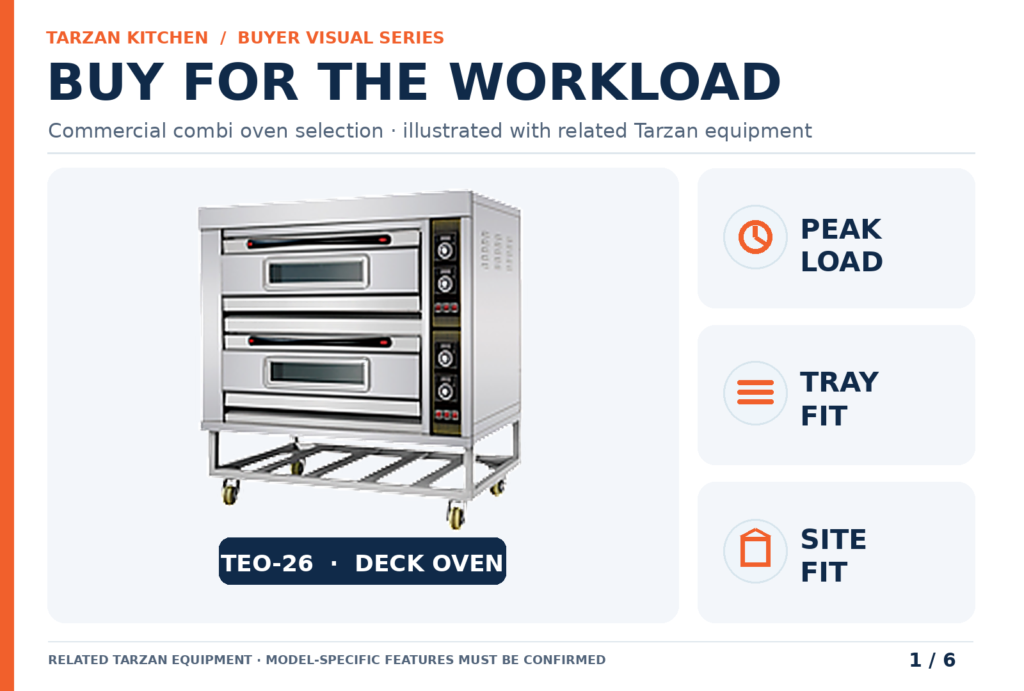
A combi oven can roast, steam, bake, regenerate and cook with controlled humidity. That range is attractive, especially when kitchen space is limited.
The difficulty appears when several jobs need the oven at the same time.
A hotel may plan to roast meat, steam vegetables and regenerate plated meals in one cavity. Each process is technically possible, but not necessarily during the same service period. Different temperatures, humidity levels and cooking times compete for the same production slot.
This commercial combi oven buying guide treats the oven as part of a production schedule rather than a collection of functions. The right model must handle the menu at peak load, fit the building and remain practical for the staff who operate and clean it.
One cavity cannot solve three simultaneous jobs
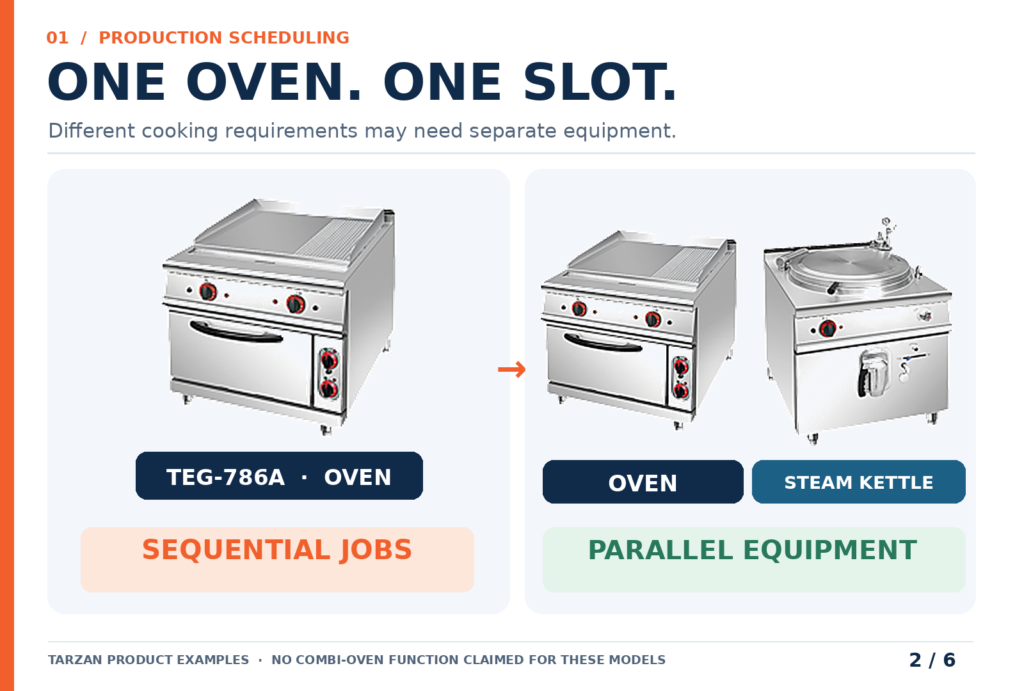
Consider a hotel kitchen preparing 180 lunch covers. The buyer is comparing a ten-pan combi oven with a larger model.
On paper, the ten-pan oven appears capable. It can roast chicken, steam vegetables and regenerate prepared dishes. The problem is timing. If the chicken occupies the cavity during the same period that vegetables must be steamed, the kitchen has to delay one product, change the preparation sequence or use another appliance.
That conflict may be manageable when meals are produced in planned batches. It becomes more serious when banquet work overlaps with à la carte service.
Moving from ten pans to twenty may help when the products can share the same cooking climate. It does not solve a scheduling conflict between foods requiring different temperatures or humidity settings. Two cavities, or a combi oven supported by another appliance, may provide more usable capacity than one larger chamber.
The buyer therefore needs more than a daily cover count. Peak orders, batch size, cooking duration and overlapping menu processes reveal the real demand.
Nominal tray count also needs context. Pan depth, product spacing and airflow requirements affect how much food can be loaded. A tray filled with shallow vegetables places a different demand on the oven from a deep pan of cold, dense food. Door openings and repeated loading can further reduce actual output.
Published capacity is a starting point. The more useful question is whether the oven can complete the required batches within the available service window.
Capacity and tray format
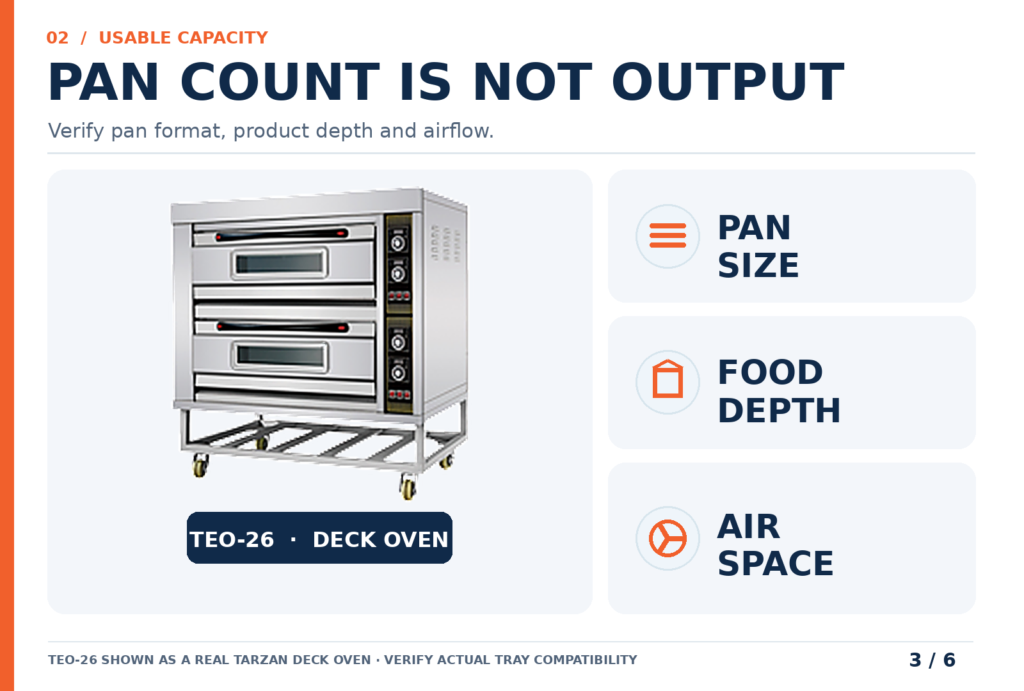
Tray format affects more than the number of portions that fit inside the cabinet. It also determines whether the oven works with the kitchen’s existing pans, racks, trolleys and preparation system.
An importer comparing models from several manufacturers should confirm the exact tray standard and spacing. Similar-looking ovens may be configured for different pan dimensions, and a mismatch can require the operator to replace pans or alter the preparation workflow.
Usable capacity should be evaluated with the intended food. Ask the supplier how many of the required pans can be loaded while maintaining suitable space around the product. If the quotation states only the maximum tray count, it may describe the rack rather than the kitchen’s practical output.
Recovery under repeated loading also matters. A fast-food kitchen placing several batches of cold product into the cavity will expose heating and steam-recovery differences sooner than a hotel using the oven for occasional regeneration. Comparable test conditions are more useful than an isolated output claim.
The control panel comes after the cooking process
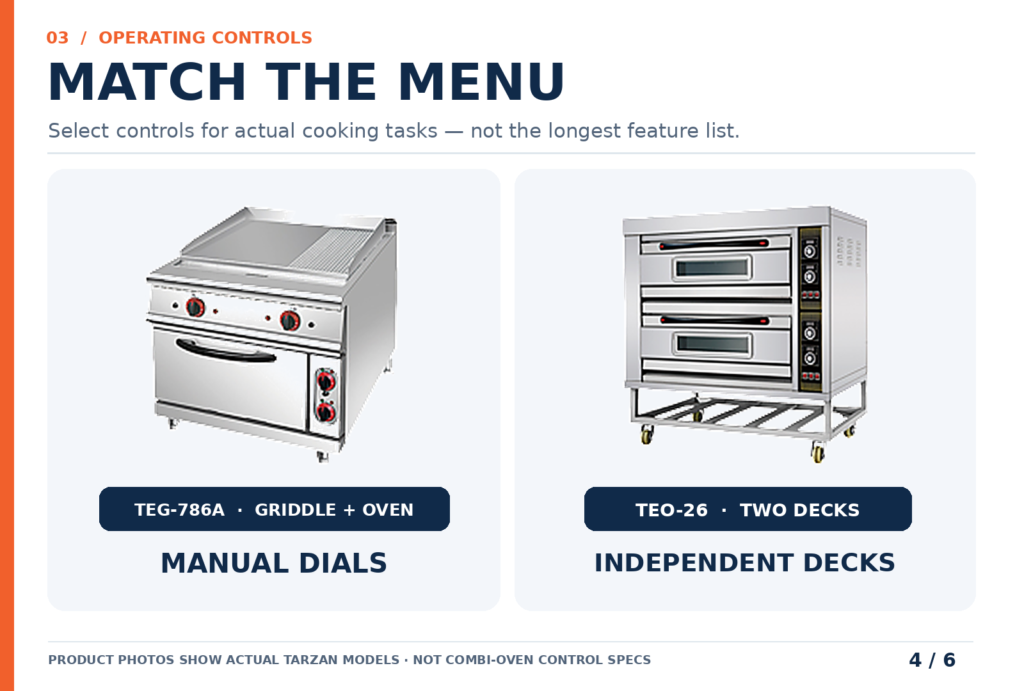
A long list of automatic programs does not establish whether the oven suits the menu.
Start by mapping the food to the process. Roasted meat may need humidity control followed by browning. Vegetables may require short steam cycles. Bakery products can be sensitive to airflow and moisture. Chilled plated meals introduce another combination of load density, target temperature and service timing.
Only then should the buyer compare cooking modes and controls.
Steam may be produced through boiler-based systems, direct injection or another manufacturer-specific design. No single method is preferable in every kitchen. Water conditions, menu, maintenance capability and expected steam demand all influence the decision.
Program storage can be valuable where several shifts or locations must reproduce the same process. A saved program controls repeatable settings; ingredients, pan depth, load density and probe position still have to be standardized.
That distinction matters for restaurant chains. Automation can reduce dependence on staff remembering every setting, but it cannot correct an inconsistent preparation method. Before paying for a more advanced control system, identify which recipes will actually use it and who will maintain those programs.
Manual controls may remain suitable for a focused menu managed by experienced cooks. More advanced interfaces earn their cost when they support a real operating requirement, such as multi-stage recipes, product monitoring or consistent execution across several locations.
Water and cleaning requirements
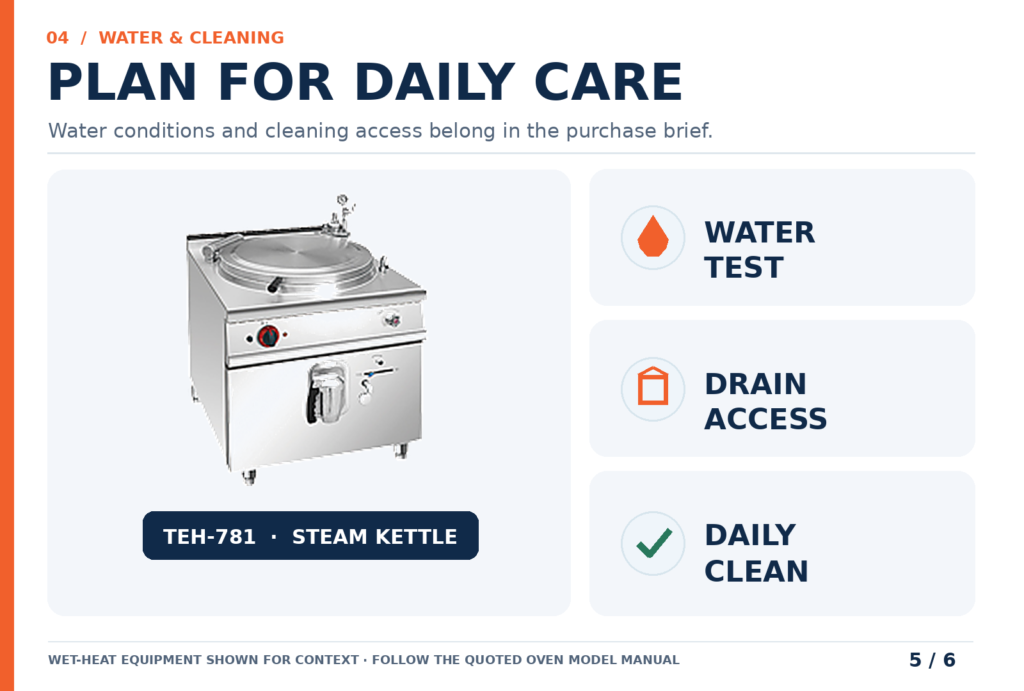
Water quality is part of the equipment specification.
RATIONAL’s installation guidance, for example, asks installers to consider hardness, chloride concentration, chlorination and conductivity when deciding whether water treatment is needed. The acceptable arrangement depends on the model and the incoming water, so treatment should not be specified from a generic hardness figure alone.
A buyer should obtain a local water analysis and send it to the supplier before finalizing the order. This allows the manufacturer to confirm whether filtration, softening or another treatment method is appropriate. It also helps the project team estimate filter replacement and maintenance costs.
Drainage deserves the same attention. Combi ovens can discharge hot water and steam, but drain temperature, connection method and required materials vary by model. The project should follow the manufacturer’s installation instructions and applicable local requirements.
Automatic cleaning reduces manual scrubbing, but it introduces its own operating routine. The buyer needs to know which detergent or treatment products are required, how often cleaning cycles will run, how long the oven remains unavailable and whether those consumables are readily available in the destination market.
The design should also allow staff to reach the door seal, glass, racks, drain screen and other areas that still need inspection. Tarzan’s guide to cleaning a commercial oven explains why routine cleaning cannot be replaced entirely by an automatic cycle.
Check the site before selecting a model
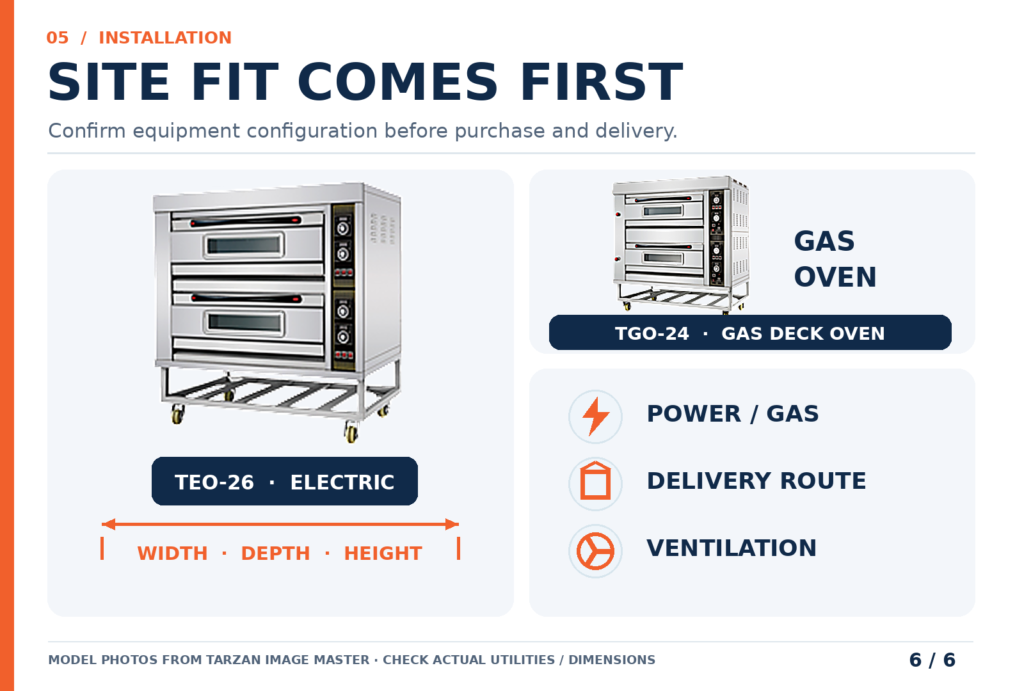
A model can suit the menu and still fail the project because it cannot be delivered, connected or serviced at the site.
Electrolux Professional’s installation guidance covers delivery access, ventilation, electrical supply, water connections, drainage and the space required around the appliance. These conditions vary by model, which is why the installation document should be reviewed before the purchase order is approved.
The project team should confirm the route from unloading point to final position, including doors, corridors, lifts and floor loading. Utility details need equal precision: voltage, frequency, phase, available electrical load, gas type where applicable, water pressure, drainage and ventilation arrangements.
Export buyers should also confirm that plugs, cables, gas components and control settings match the destination market. A lower quotation loses its advantage if the equipment requires unexpected site work or arrives in the wrong utility configuration.
The premium needs an operating case
Energy performance should be compared at matched capacity and under comparable test conditions.
The ENERGY STAR commercial oven program evaluates eligible combination ovens using measures that include cooking efficiency, idle energy rate and water consumption. These figures provide stronger evidence than a general high-efficiency label, although buyers still need to confirm that the exact quoted model is covered.
Local operating costs determine the financial consequence. Electricity or gas prices, daily cooking hours, idle time and water charges can make the same efficiency improvement valuable in one market and marginal in another.
The premium model also has to improve something the kitchen will use. Faster batch recovery matters when the oven limits peak production. Stored programs matter when recipe consistency is difficult across shifts. Automatic cleaning matters more when manual cleaning consumes paid labour and delays closing.
A simpler convection oven may be the better purchase for a kitchen that mainly bakes or roasts dry products. Where steaming and roasting frequently occur at the same time, separate appliances can provide useful redundancy and simultaneous capacity, although they require more space and utility connections.
The strongest comparison is therefore between complete operating arrangements: purchase price, installation, expected workload, utilities, consumables, cleaning time and service support.
Build the RFQ around the workload
A useful quotation request begins with the menu and production schedule. State the foods being cooked, peak covers, batch sizes, tray format, operating hours and processes that must run simultaneously.
Then provide the site information: destination country, available power, gas type if relevant, water analysis, drainage, ventilation, delivery restrictions and required accessories. Tarzan’s commercial kitchen equipment checklist can help project buyers collect these details, while its equipment selection by application places the oven within the wider kitchen workflow.
The supplier should identify the exact model and confirm capacity assumptions, cooking modes, utility connections, water-treatment requirements, cleaning system, included accessories and after-sales support.
Once those details are available, buyers can request a commercial kitchen equipment quotation based on the real workload rather than a generic oven description.
A combi oven earns its place when the production schedule, site and support plan all fit the same model. If incompatible jobs still collide at peak, more functions on the control panel do not create more oven capacity.