
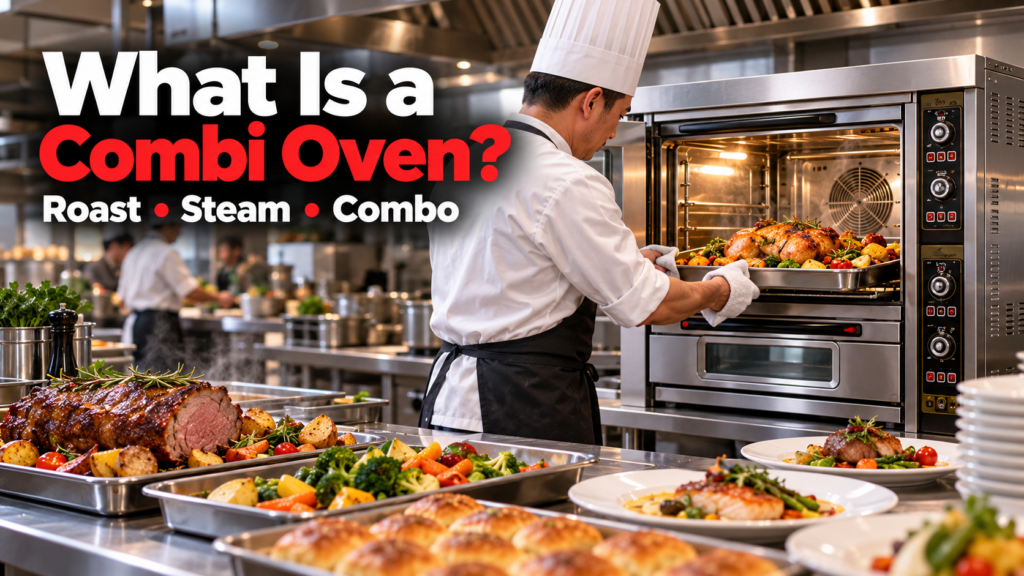
Three cooking modes in one cabinet sounds like a straightforward reason to buy a combi oven.
It isn’t.
A combi oven is a professional oven that can cook with circulated hot air, steam, or a controlled combination of both. This gives the kitchen more control over moisture and heat than a standard convection oven.
That explains how the equipment works. It does not show whether the oven will improve a particular kitchen.
The real question is whether one cooking chamber can absorb the menu’s production schedule without becoming a bottleneck. Capacity, overlapping batches, tray format, water quality, cleaning time and site utilities often matter more than the number of functions shown on the control panel.
Three modes, one working chamber
The U.S. Environmental Protection Agency describes a combination oven as having three operating modes: steam, circulated hot air and a combination of the two.
Convection mode circulates dry heat around the chamber. It is commonly used for roasting, baking and browning.
Steam mode creates a moist cooking environment. It suits products that benefit from limited surface drying, including vegetables, seafood and some regeneration work.
Combination mode uses hot air and steam together. By controlling both temperature and moisture, the oven can roast while limiting excessive drying, regenerate prepared food or move through several cooking stages in one program.
This is the main difference between a combi oven and a commercial convection oven. A convection oven circulates hot air; a combi oven adds steam generation and humidity control.
The distinction is useful, but it has a physical limit. Combination refers to the available cooking modes, not several independent chambers. A single-cavity oven cannot usually steam one batch at one climate while roasting another batch at a conflicting temperature and humidity level.
That limitation is easy to miss when buyers compare feature lists.
The production schedule decides whether the versatility is real
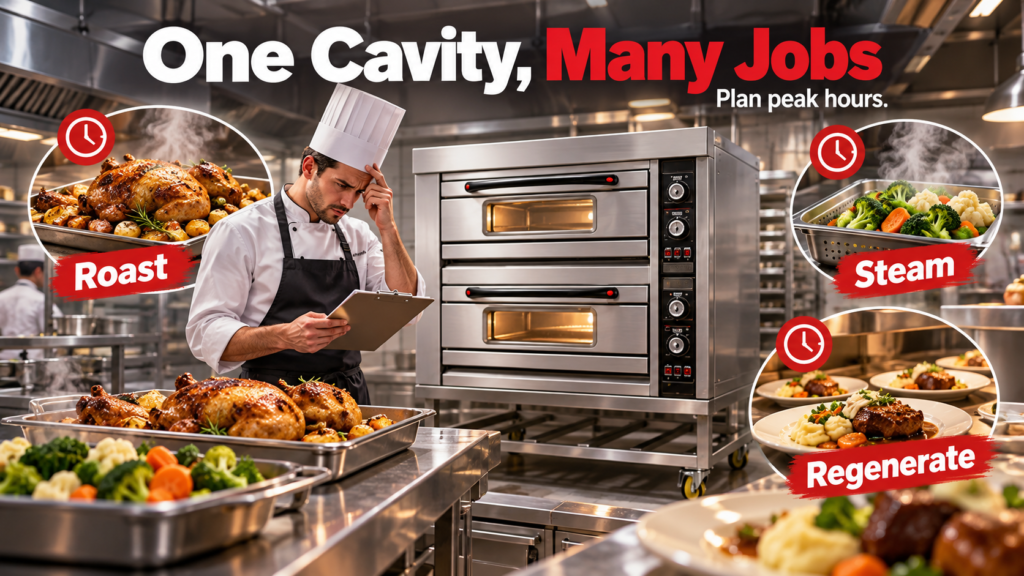
For illustration, take a catering kitchen preparing 240 boxed lunches. The menu includes roasted chicken, steamed vegetables and cooked meals that must be regenerated shortly before dispatch.
A ten-pan combi oven may be able to perform all three processes. If vegetable steaming finishes before the chicken is loaded, and regeneration begins after roasting, the same chamber can move through the work in sequence. In that situation, combining several processes in one footprint has practical value.
The answer changes when the batches overlap.
If the chicken must continue roasting while the vegetables need a full steam cycle, the oven has to delay one product or compromise the production plan. More programmable recipes will not solve the conflict. A larger chamber may help when products can share the same climate, but additional tray positions do not create a second cooking environment.
The buyer therefore needs to map the busiest production window rather than relying on daily meal volume. Record which foods enter the oven, their batch sizes, cooking modes, cycle times and required completion times. Then place those cycles on the same schedule.
This reveals whether the kitchen needs one combi oven, stacked units, another supporting appliance or a different production sequence.
The same reasoning applies beyond catering. A hotel banquet kitchen working in planned batches can use a combi oven differently from a restaurant that receives unpredictable orders throughout service. Tarzan’s guide to commercial kitchen equipment by application provides the wider planning context, but the oven still needs to be evaluated against the actual menu and peak workload.
Capacity, trays and controls
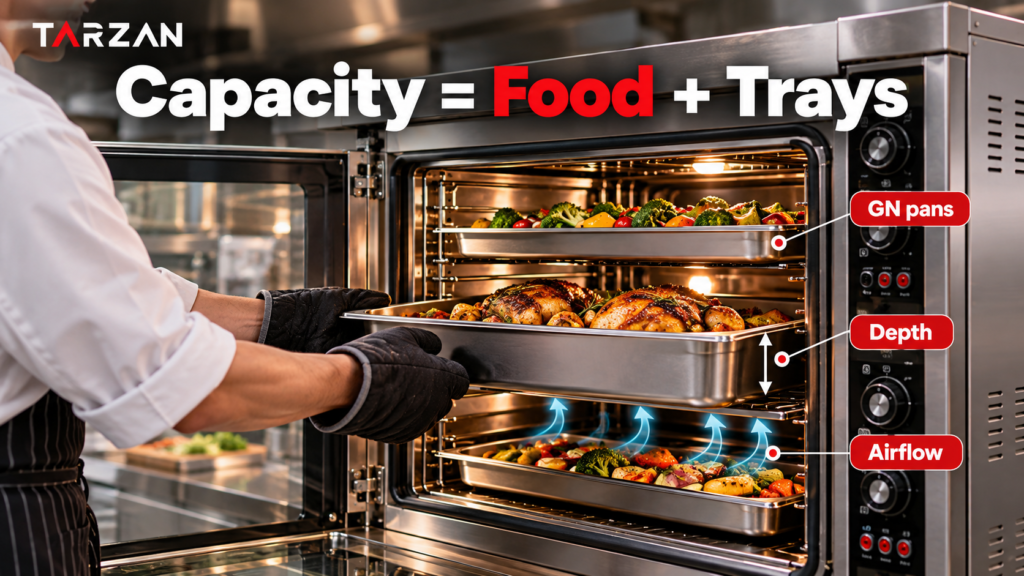
Manufacturers usually describe combi oven capacity by tray or pan count. That number is meaningful only when the tray format and required spacing are known.
A model designed around GN pans may not fit the sheet pans already used by a bakery or restaurant chain. Even when the nominal pan count matches, deep containers, tall products or spacing required for airflow can reduce the number of usable positions.
A buyer comparing two ten-pan ovens should therefore confirm the exact pan dimensions, maximum pan depth, rack spacing and included rails. The more useful capacity question is how many pans of the intended product can be cooked during one real batch.
Loading conditions also affect output. Ten shallow pans of vegetables impose a different demand from ten deep pans of chilled food. Repeated door openings and back-to-back batches can expose recovery differences that are not visible in a catalogue capacity figure.
Controls should be judged in the same practical way.
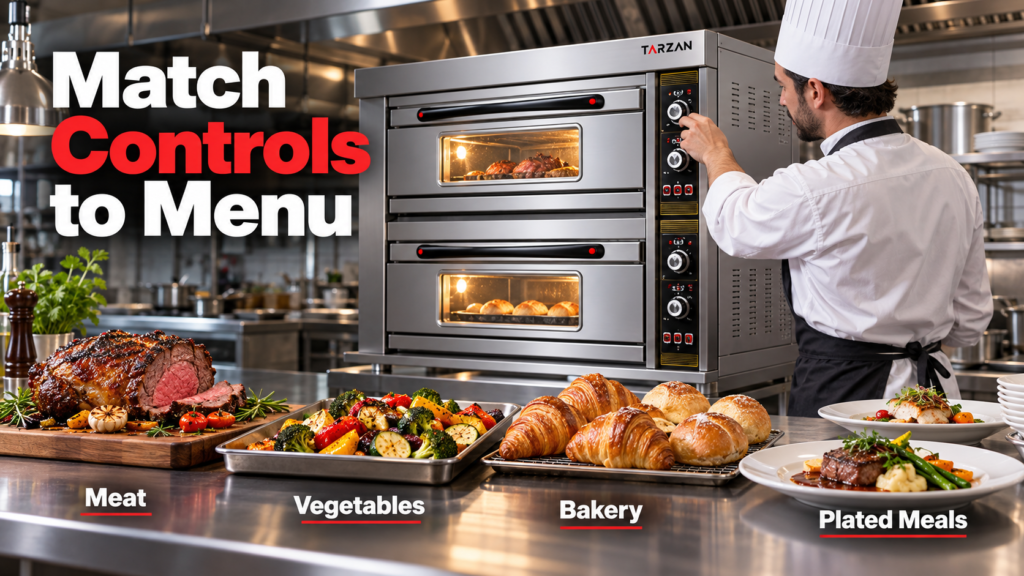
Stored recipes can repeat time, temperature, humidity and fan settings across shifts. A core probe can help the oven respond to internal product temperature. Neither feature standardizes portion thickness, starting temperature, load density, pan depth or probe placement.
If those inputs change, the cooking result can change even when the same program is selected.
Before paying for a more advanced control system, identify which recipes will be programmed, who will manage them and whether the preparation process is consistent enough for the programs to be useful. A focused kitchen with experienced staff may need fewer automatic functions than a restaurant chain trying to reproduce the same process at several locations.
Water, cleaning and the installation site
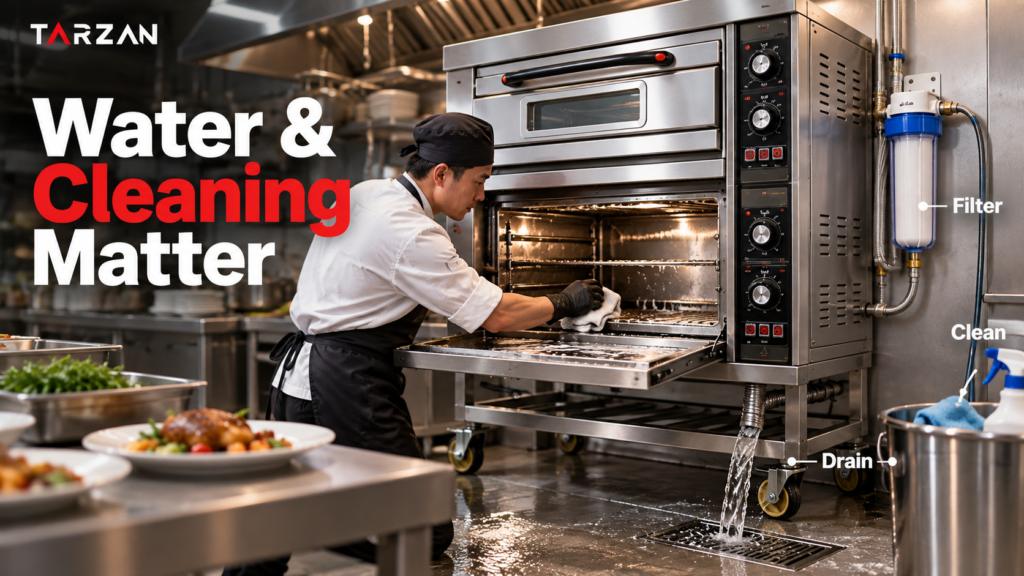
Steam generation makes water part of the equipment decision.
The EPA’s WaterSense guidance for combination ovens distinguishes between boiler-based and boilerless designs. The two approaches can differ in water consumption, steam generation and maintenance requirements.
That does not make one design universally better. Buyers need model-level information covering expected water use, steam performance, water treatment and maintenance.
Incoming water quality deserves particular attention. Hardness, chloride, sediment and other water conditions can affect scale formation or corrosion, but acceptable limits and treatment methods vary by manufacturer. A local water report should be compared with the installation requirements of the exact model before filtration or softening equipment is selected.
Drainage also needs to follow the manufacturer’s specification. Drain temperature, pipe material, outlet size, venting and air-gap requirements can vary. The presence of a nearby floor drain does not prove that the proposed connection is suitable.
Electrical or gas requirements must be checked at the same level of detail. Voltage, frequency, phase, connected load, gas type, operating pressure and connection method can differ between markets and models. Ventilation requirements may also depend on the appliance, menu and local rules.
An oven that fits the floor plan can still be an expensive purchase if the building cannot support it without substantial utility work.
Efficiency claims require comparable evidence. Current ENERGY STAR commercial oven criteria assess eligible combination ovens using cooking efficiency, idle energy and water-consumption requirements. Buyers outside the relevant certification program can apply the same principle by comparing model data under equivalent operating conditions rather than accepting a general high-efficiency label.
Automatic cleaning adds another operating cycle to the kitchen. It may reduce manual scrubbing, but it still requires the correct chemical, water, drainage and a period when the oven is unavailable. Consumable availability matters for importers and operators who cannot obtain the specified products locally.
Door seals, rack supports, glass, accessible drains and other user-serviceable areas still require inspection. Tarzan’s guide to cleaning a commercial oven explains why the model manual should determine the cleaning method, even when the oven includes an automatic program.
When a combi oven is the wrong purchase
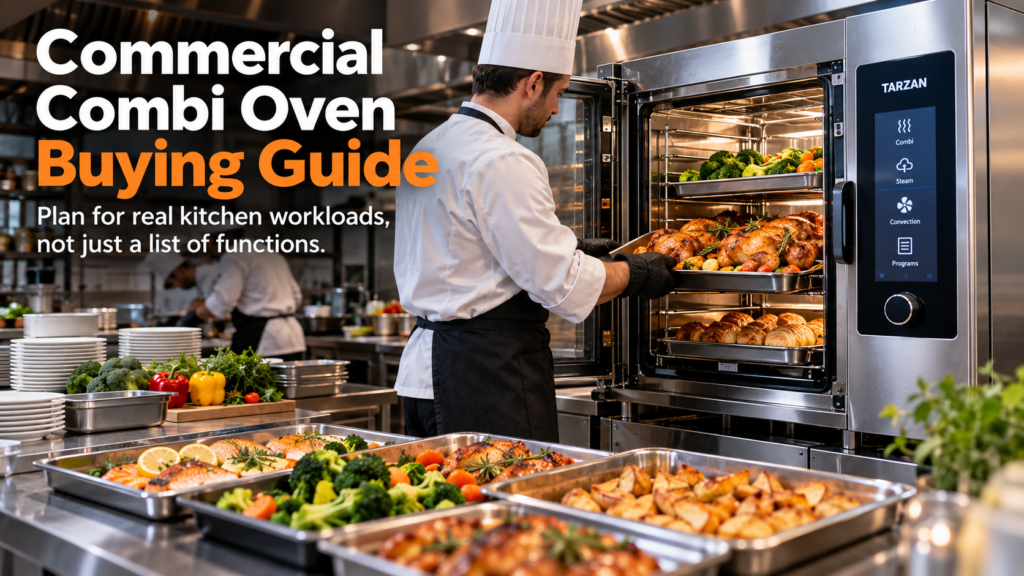
A combi oven earns its additional complexity when the kitchen regularly uses steam, humidity control, regeneration or multi-stage cooking.
A menu built mainly around dry baking and roasting may be served adequately by a commercial convection oven. In that case, paying for steam generation, water treatment and automatic programs can add installation and maintenance requirements without changing the production result enough to justify them.
One combi oven may also be a poor replacement for two appliances that are frequently needed at the same time. A convection oven and steamer occupy more space, but they provide independent cooking environments and operational redundancy. Consolidating them into one cavity can save floor area while making simultaneous production more difficult.
Service support changes the calculation as well. An advanced control system has limited operational value if the buyer cannot obtain technical documents, replacement components, approved cleaning products or qualified service in the destination market.
Importers and distributors should look beyond the first installation. Voltage variants, water conditions, tray standards, control languages, spare parts and service capability may differ across the markets they serve. A configuration that works in one country should not be assumed suitable for another.
The premium is easier to defend when the oven solves a measured problem: limited floor space, repeated moisture loss, inconsistent programmed processes or several sequential cooking jobs that currently occupy separate appliances. Without that operating case, versatility can become unused capacity.
Specify the workload before the model
A useful quotation request should not begin and end with ten-tray combi oven.
The supplier needs the food being cooked, pan format, batch size, peak production window and processes that must run at the same time. The buyer should also provide the destination country, voltage, frequency, phase, gas type where applicable, water analysis, drainage arrangement, ventilation conditions and delivery restrictions.
Quotations should identify the exact model, usable tray format, utilities, included accessories, cleaning system, required consumables, available technical documents and recommended spare parts. Installation responsibility and model-specific support should be clear before prices are compared.
Tarzan’s restaurant kitchen equipment checklist can help buyers collect the wider project information. Once the workload and site conditions are documented, the details can be submitted through the commercial kitchen equipment RFQ for an availability and configuration review.
The three cooking modes explain what a combi oven is. The production schedule, installation site and support plan decide whether it is worth buying.